Table of Contents
Many of us live more of our lives on automatic pilot than we realize. We wake, work, manage, react, cope. We build routines, systems, shortcuts. Many are useful. Habits save energy. They help us function. But developing self-awareness means beginning to notice what those habits have quietly become. At some stage, habits begin to shape our identity.
We find ourselves saying:
"That's just the way I am."
"I always do this."
"I can't change."
This is rarely true. It simply means we haven't yet looked beneath the habit.
The Invisible Architecture of Our Days
Most of us move through our days inside patterns we cannot see.
We call them routines, habits, preferences. We think of them as neutral, efficient, practical. But these patterns carry something deeper. They carry our history. Our early learning about what's safe and what's dangerous. Our conclusions about who we must be to belong. Our decisions about what matters and what doesn't.
Developing self-awareness means beginning to see this invisible architecture. The morning ritual that keeps you moving too fast to feel. The work pattern that leaves no space for uncertainty. The relationship habit that protects you from being truly seen. These aren't random. They're solutions we created, often early in life, to very real problems. They worked once and many still serve us.
The question developing self-awareness asks is: "Are they serving who I'm becoming?"
Research shows that most of our daily actions, between 40% and 60^, are driven by habit rather than conscious decision. We live on autopilot more than we know. But autopilot, while efficient, doesn't discern. It cannot adapt to what's emerging now. It can only repeat what worked before.
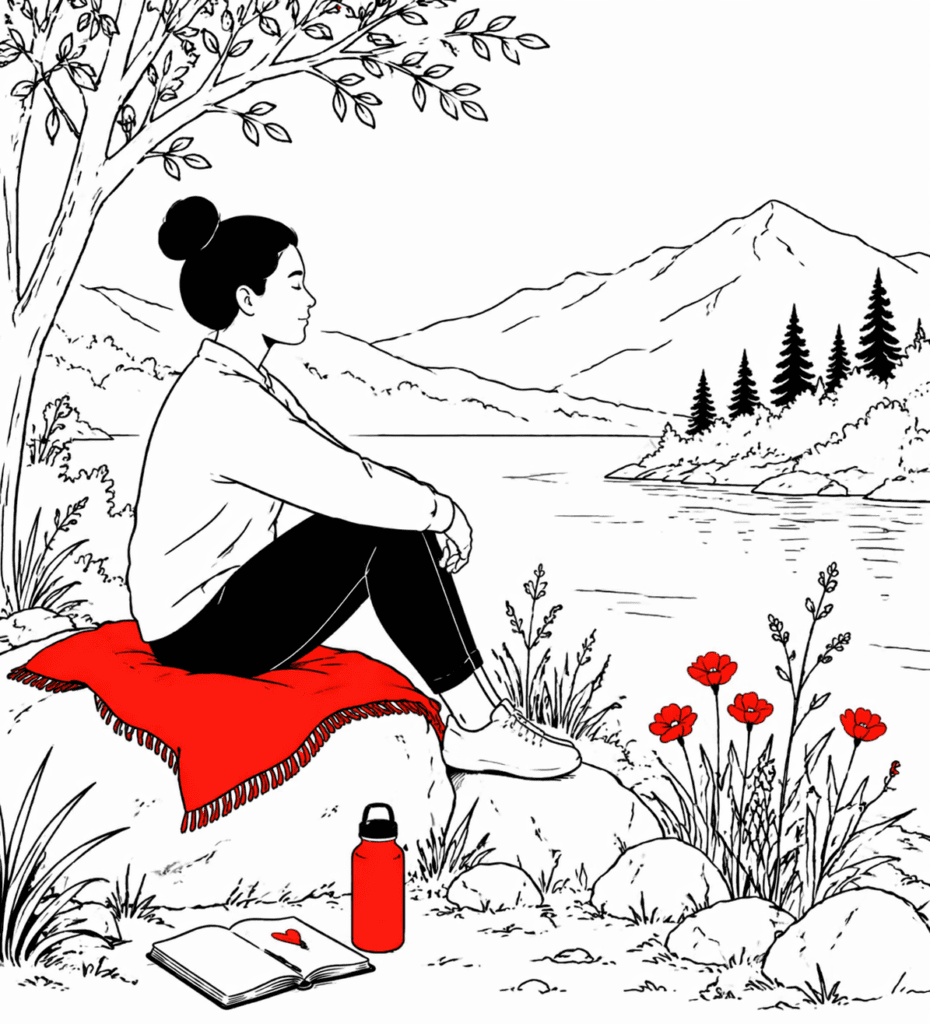
Developing Self-Awareness: Understanding What Drives Habits
Every habit comes from a story we have taken on. The habit of saying yes may come from the belief: "My needs don't matter." The habit of overworking may come from: "I'm only valuable when I'm productive." The habit of conflict avoidance may come from: "Disagreement means disconnection." The habit of constant motion may come from: "Stillness is dangerous." The habit of controlling may come from: "If I don't hold everything together, it will fall apart."
These aren't conscious thoughts. They're interpretations we absorbed from family, from culture, from early experiences that taught us how to survive. When we slow down enough to observe the interpretation underneath, something else can emerge for us. Awareness gently interrupts automaticity.
The Pause That Changes Everything
You may be surprised to learn that developing self-awareness doesn't require hours of meditation or years of therapy.
It begins with a pause. Three seconds. Five breaths. The space between stimulus and response. In that pause, you can notice what's actually happening, not what you think should be happening. And not what you wish were happening.
What is. Your breath has become shallow. Your shoulders have risen toward your ears. Your inner voice has shifted to criticism. Your body has moved into protection mode. This noticing isn't analysis. It's not figuring out why or creating a narrative about it. It's simply witnessing: "This is what's present right now."
Studies in contemplative neuroscience show that this quality of attention - observing without immediately trying to change - actually creates the conditions for transformation. When we notice without judgment, something loosens and the pattern that felt fixed begins to reveal itself as a pattern, not as truth. A habit we developed, not who we inherently are. A response we learned, not our only option.
This is the foundation of developing self-awareness. Not forcing ourselves to be different. Not judging ourselves for being human. Simply creating enough space to see clearly and from that seeing, choice emerges naturally.
How Developing Self-Awareness Opens New Choices
Awareness gives us the chance to turn towards ourselves and ask: "What is happening here?"
Without criticism.
Without analysis paralysis.
Just noticing.
We can begin to observe.
Our inner conversations and the stories we tell ourselves about what's happening and what it means.
Our emotional tone, including the mood coloring how we perceive and interpret everything we encounter.
Our bodily state and noticing the tension we're holding, the breath we're restricting, the ground beneath our feet.
Our repetitive reactions which indicate the responses that arrive before we've consciously chosen anything.
In the act of noticing, we start to see we have more choice.
This is what developing self-awareness makes possible. Not perfection. Not the elimination of habits.
But the capacity to recognize when we're on autopilot.
And in that recognition, the possibility of choosing differently.

When Autopilot Reveals Itself
Let me share three moments when developing self-awareness revealed patterns that had been invisible.
The Yes That Wasn't True
Maria noticed she said yes before people finished asking. Her body would nod, her mouth would form the word, before she'd even heard the full request.
When she paused long enough to notice what was underneath, she found: "If I say no, I'll be alone."
This interpretation had governed her life since childhood. Saying yes meant belonging. Saying no meant abandonment.
The habit wasn't the problem. The habit was protecting her from what felt like a threat to her survival.
Developing self-awareness didn't make Maria stop saying yes. It gave her the capacity to notice when yes was true—and when it was just old protection.
She began to feel the difference in her body. True yes felt open, grounded. Automatic yes felt contracted, rushed, slightly panicked.
Over time, she built the capacity to pause. To feel. To choose.
The Busy That Was Hiding
James realized he never stopped moving.
Emails. Projects. Errands. Workouts. Social plans. If there was an empty hour, he filled it.
When he finally paused long enough to notice what he was avoiding, he found grief.
The loss of his father three years earlier. The relationship that had ended. The dream that hadn't materialized.
Staying busy meant not feeling. Not feeling meant not falling apart.
The habit of constant motion was protecting him from pain he believed would overwhelm him.
Developing self-awareness gave James the capacity to notice: "I'm running." And in that noticing, to ask: "What am I running from?"
He didn't have to stop being busy. He began to build a different relationship with stillness.
Five minutes in the morning. No agenda. Just being.
The grief didn't overwhelm him. It moved through him. And on the other side, he found something he hadn't expected: spaciousness.
The Silence That Was Protecting
Sophie noticed she went quiet when things mattered most.
Important conversations. Moments of disagreement. Times when her perspective was needed.
Her voice would simply... disappear.
When she became curious about what was underneath, she found: "If I speak, I'll be too much. If I'm too much, I'll be rejected."
This interpretation had been with her since childhood. Be small. Don't take up space. Your bigness is a burden.
The habit of silence was protecting her from a rejection she experienced as annihilation.
Developing self-awareness didn't force Sophie to speak. It helped her notice when she was choosing silence—and when silence was choosing her.
She began to feel her throat close. Her breath stop. Her aliveness retreat.
And in feeling it, she built the capacity to stay present when the urge to disappear arose.
Not every time. But sometimes. And sometimes was enough.
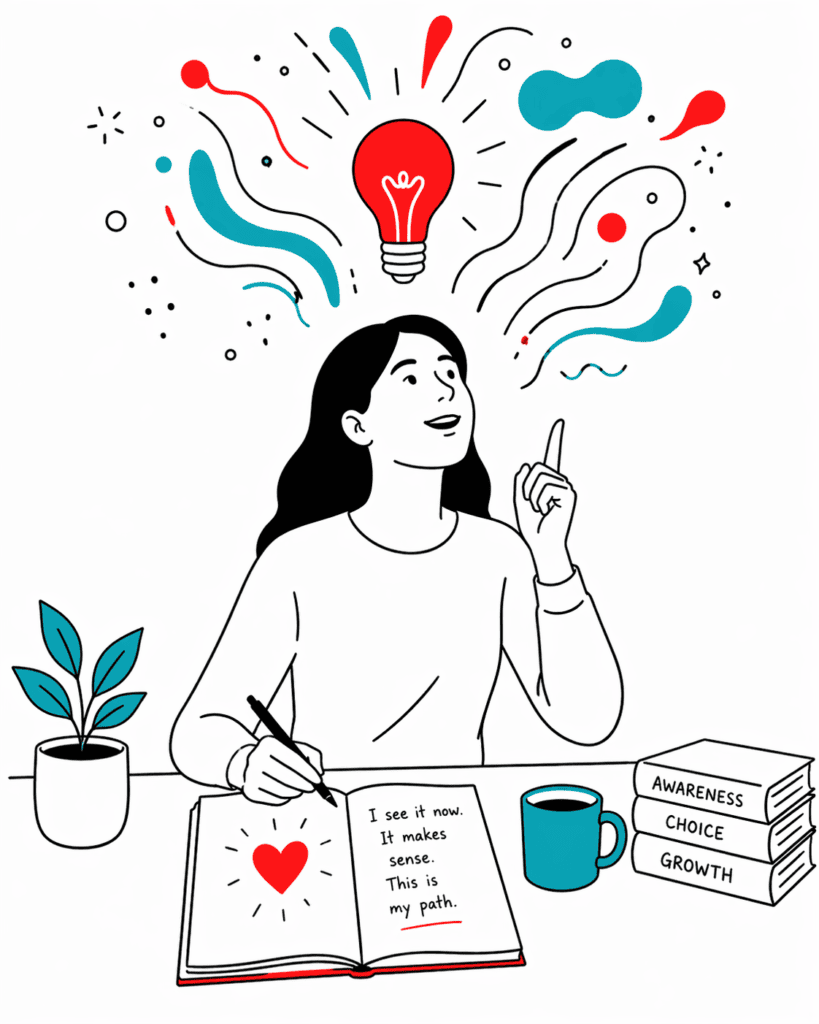
Developing Self-Awareness: The Shift to Intentional Living
his simple and yet profound act of inquiry allows us to develop:
More presence—the capacity to be here, now, with what is, rather than lost in past or future.
Increased agency—the recognition that we have choice, even when circumstances feel fixed.
Dignity—the ability to meet ourselves with respect, regardless of what we find.
Compassion—the understanding that our patterns made sense once, that they were attempts to take care of ourselves.
We become authors of our lives rather than passengers in them.
Participating consciously.
Responding more thoughtfully.
Aligning our actions with what matters most.
This doesn't mean we never operate on autopilot. We will. We're human.
But developing self-awareness means we notice when we do.
And in that noticing, we have a choice.
Common Patterns in Developing Self-Awareness
As you practice developing self-awareness, you might notice some common experiences
The Pattern Becomes More Obvious Before It Changes
This can feel discouraging. You start paying attention to your habit of people-pleasing, and suddenly you see yourself doing it everywhere. This is actually progress. You couldn't see it before. Now you can. Awareness always precedes change.
You'll Want to Skip the Noticing and Jump to Fixing
Our culture teaches us to fix, improve, optimize. The urge to change the pattern as soon as we see it is strong. But developing self-awareness requires us to resist that urge, at least initially. Spend time simply observing. The impulse to fix often comes from the same place as the habit—the belief that how we are isn't okay.
The Practice Feels Too Simple to Matter
Three breaths? Five minutes of noticing? How could something so small create change? But transformation doesn't come from grand gestures. It comes from consistent, small acts of attention. Water doesn't carve rock through force. It carves through persistence.
A Reflection
You might like to pause here and choose one habit you feel "stuck" with. Not to judge it. Not to fix it. Just to become curious about it. Ask yourself:
"What interpretations might be underneath this behaviour?"
Stay with the question. Don't rush to answer. Let it work on you.
Then ask:
"What other interpretations could there be?"
Be willing to live in the inquiry. See what happens when you bring gentle curiosity instead of harsh judgment. Notice what you notice. Feel what you feel. Let awareness do its quiet work.
Practices to support this kind of eveloping self-awareness are available in The Human Connection Store.
Real transformation, the kind that shifts how you're being, not just what you're doing, requires patience, curiosity, and compassion. The journey from autopilot to awakening isn't linear. It's a spiral. You'll return to the same patterns again and again, but each time from a different level of awareness, each time with more choice, each time with more possibility. This is the practice of developing self-awareness: not perfection, just presence; not forcing, just noticing; not judgment, just gentle, persistent curiosity about what's true.