Table of Contents
- Understanding Emotional Literacy: More Than Emotional Intelligence
- The Gap in Our Education: What We Learned Instead
- Emotions and Moods as Orientation
- How Emotional Literacy Changes What We See
- An Example
- Emotional Literacy in Daily Life: Moments of Recognition
- Working With, Not Against, Emotions
- Emotional Literacy as Ongoing Practice
- Cultivating Emotional Literacy: Where to Begin
- A Reflection
Many of us were never taught emotional literacy - how to actually be with our emotions rather than manage them away. We learned how to manage tasks, meet expectations, and keep going even in circumstances that called for something different. Emotions were often something to suppress, control, ignore, or work around. If they showed up too strongly, they were treated as inconvenient or inappropriate, with gender and culture playing a major role.
And yet, emotions are not interruptions to being human, rather they are a very big part of how we orient ourselves to the world.
Understanding Emotional Literacy: More Than Emotional Intelligence
Emotional literacy is the capacity to read and understand the language of emotion, both in ourselves and in others. It goes beyond naming feelings to understanding what they reveal about how we're oriented to the world in any given moment.
We hear a lot about emotional intelligence, which often focuses on managing emotions effectively in professional or social contexts. Emotional literacy is something both simpler and deeper. It's about learning to read emotions the way we learn to read text, to recognize their patterns and meanings, to understand what they're communicating.
The capacity to recognize and differentiate emotions, what we call emotional literacy, is directly linked to well-being and relationship quality. When we can accurately read our emotional experience, we make better decisions, navigate relationships more skillfully, and experience less distress.
But emotional literacy isn't just a cognitive skill. It's a way of being in relationship with ourselves that acknowledges emotions as fundamental to human experience, not optional add-ons to be managed or optimized. When we develop emotional literacy, we work with our Way of Being, not just our behavior. We begin to see that emotions aren't problems to solve but information to understand.
The Gap in Our Education: What We Learned Instead
Most of us grew up learning mathematics, history, and language. We learned how to analyze literature, solve equations, and write essays. But we rarely learned how to be with the full range of human emotion.
In many families and educational systems, there was an implicit curriculum about emotions, sometimes expressed, often not. We learned that some emotions were acceptable and others weren't. That expressing certain emotions too openly was a sign of weakness, that good people stay calm and positive, and that strong people don't get overwhelmed. We learned to ask "What should I do?" long before we learned to ask "What am I feeling?"
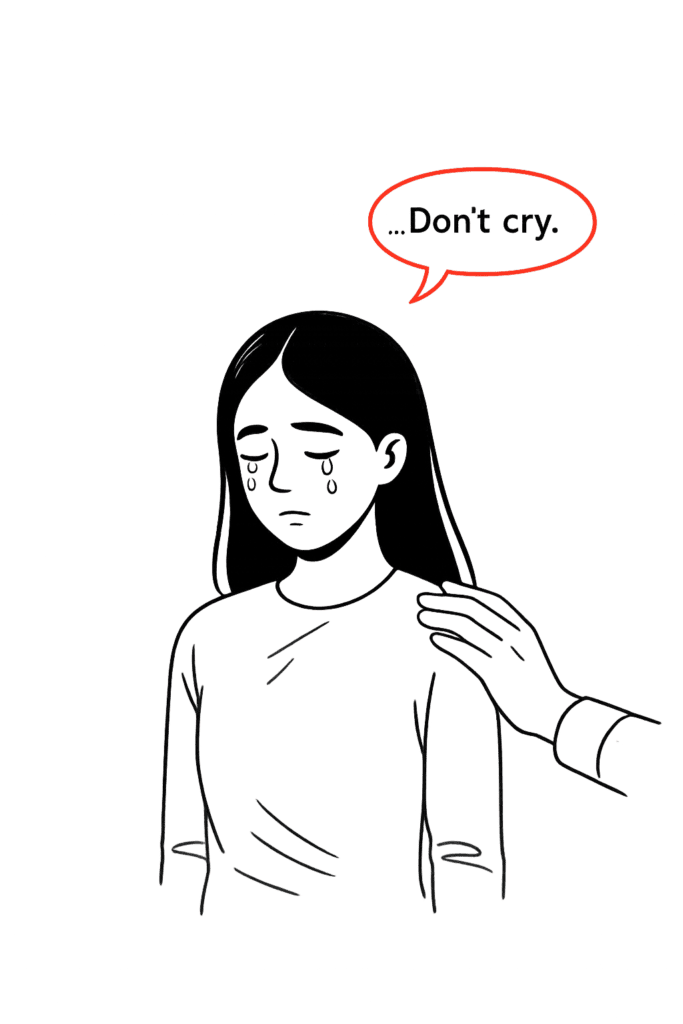
The messages were often subtle. A parent saying "Don't cry" when we were hurt. A teacher praising the student who stayed composed under pressure. A coach telling us to shake it off and get back in the game. None of this was necessarily meant to harm us, but the cumulative effect was clear: emotions are things to be controlled, not understood.
So we developed strategies. We became very good at pushing emotions aside, at staying busy enough that we didn't have to feel what was underneath, and at analyzing our way through experiences that actually called for something else entirely. And now, as adults, many of us find ourselves skilled at productivity but uncertain about how to simply be with what we're feeling. We've been taught to treat emotions as obstacles to effectiveness rather than as essential aspects of being human.
This is the gap that emotional literacy addresses. Not by adding another skill to our repertoire, but by developing a fundamentally different relationship with our emotional experience.
That's the not so good news. The very good news is that we can become emotional learners, and begin to observe our emotional world. The even better news is that over time we can play an active role in shifting our emotions and moods.

Emotions and Moods as Orientation
Emotions shape what we notice, how we interpret situations, and what actions feel available to us. They directly influence our decisions, our conversations, and the stories we tell ourselves about what is happening. When we don't recognize this, emotions still shape us. It's just that we aren't aware that this is what is happening.
Emotions tend to surface in response to specific moments, be it a conversation, an email, or some unexpected change. Moods linger longer and color our overall experience of life.
A mood of anxiety can make the world feel uncertain and risky. A mood of resignation can drain us of our energy and motivation. A mood of resentment can narrow our attention to what feels unfair. In contrast a mood of enthusiasm can open us to possibility and movement.
None of these moods are right or wrong. They are orientations, ways in which we are already positioned toward the world before we consciously take action.
Moods shape what we notice and what actions feel available before we consciously decide anything. We don't first observe the world objectively and then have an emotional reaction. We encounter the world already colored by our emotional state. When we become more emotionally literate, we begin to notice these orientations rather than being unconsciously driven by them. We start to see that what we feel is not just personal, but shaped by context, lived in the body, and full of meaning.
This awareness alone often creates space.
How Emotional Literacy Changes What We See
When we develop emotional literacy, something fundamental shifts in our experience. We begin to notice how emotions inform not just how we feel, but what we perceive as possible.
Studies in decision science demonstrate that emotions aren't obstacles to good decisions, instead they're essential information we need to make choices aligned with what matters to us. When we can read our emotions accurately, we access wisdom we might otherwise miss.
Consider how differently we see the same situation depending on our emotional state. A colleague's feedback might feel like a helpful suggestion when we're in a mood of curiosity, but like a personal attack when we're in a mood of defensiveness. The words are the same. What changes is our orientation, our emotional position toward the experience.
With emotional literacy, we begin to recognize this dynamic. We notice: "I'm reading this email as threatening. Is that what it actually is, or am I in a mood of anxiety that's shaping how I'm interpreting it?" This doesn't mean our emotional reading is wrong. It means we have more information. We can ask: "What is this emotion revealing about what matters to me? What is it protecting? What is it pointing toward?"
Emotional literacy also changes how we relate to others. When we can read our own emotions more accurately, we naturally become more attuned to the emotional landscape of those around us. We notice when someone's words don't match their tone. We sense when a conversation has shifted even if nothing explicit was said. We become more available to what's actually happening between people, not just what's being spoken.
This kind of awareness supports richer relationships, more genuine connection, and the capacity to navigate complexity with more grace and skill.
An Example
In a coaching conversation, a client described feeling increasingly frustrated with people around him. He spoke about losing patience and feeling irritated by things that never used to bother him.
As we slowed the conversation down, he noticed that beneath the irritation was a persistent sense of resentment, a mood he had been carrying for some time without naming it. The frustration was not the starting point. It was the surface expression of something deeper. Instead of seeking an explanation or trying to change his reactions, we looked at what the mood was offering and taking care of for him, strange as that sounds. This was an important first step.
He began to notice when the resentment was present, how it shaped his interpretations, and how it showed up in his body as a tightness in his jaw, increasing tension in his shoulder area, and foot tapping. He realised that when he was in this mood he pulled away from connection even when he wanted to engage.
Together, we designed a simple practice. When he noticed the resentment arising, he would pause and ask himself: "What is this mood taking care of for me right now? What does it not want me to feel or face?"
Over time, he discovered that the resentment was protecting him from feeling disappointed. He had expected certain things from people and situations, and when those expectations weren't met, resentment became a way to avoid the vulnerability of disappointment. This realization didn't make the resentment disappear immediately. But it changed his relationship to it. He could recognize it, understand its purpose, and sometimes choose to feel the disappointment directly rather than defaulting to resentment.
His mood gradually shifted to one of more acceptance, and he experienced more ease. This happened not because he forced himself to be different, but because he was no longer unconsciously driven by an unnamed emotional tone. The shift came through awareness, not effort.
This is what emotional literacy makes possible. We learn to read our emotions as information rather than treating them as problems to solve.
Emotional Literacy in Daily Life: Moments of Recognition
Emotional literacy shows up in small, everyday moments as much as in significant challenges.
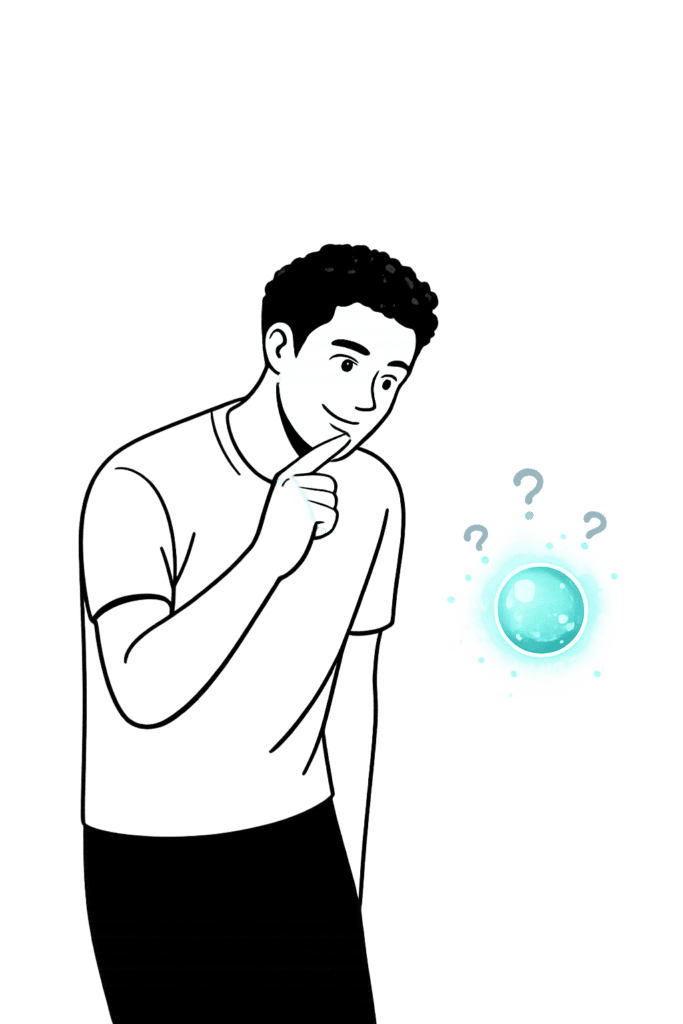
A friend shares something important with you. As you listen, you notice a tightness in your chest. With emotional literacy, you can pause and ask: "What am I feeling right now? Is this anxiety or disappointment about what they're telling me about? Is this an old memory and what happened for me then?"
Just naming it creates space. You can be present with your friend while also being aware of your own emotional response, rather than either suppressing what you feel or being overwhelmed by it.
Or you're about to have a difficult conversation at work, and you notice you've been avoiding it for days. With emotional literacy, you can explore what's underneath the avoidance. Fear of conflict? Worry about how you'll be perceived? Uncertainty about what you actually want to say? Understanding what you're feeling doesn't necessarily make the conversation easy, but it gives you more agency. You're choosing to have the conversation with awareness of your emotional state, rather than either avoiding it indefinitely or plunging in reactively.
Or perhaps this: You wake up feeling heavy, unmotivated, not quite yourself. Without emotional literacy, you might judge yourself for not being more productive or positive. With it, you can pause and notice: "I'm in a mood of resignation right now. What's that about? What has shifted? What am I telling myself about what's possible? Sometimes just recognizing the mood begins to loosen its grip. You realize it's a temporary state, not a permanent truth about your life or yourself.
These are the small but significant moments where emotional literacy changes our experience because we develop the capacity to read what's actually happening in our emotional landscape and respond with awareness rather than habit.
Working With, Not Against, Emotions
Many of us try to change emotions by denying them, being at war with them, or pushing against them. We tell ourselves to calm down, cheer up, be more positive, or stop feeling what we're feeling. While this may work temporarily, it often reinforces the idea that something inside us is wrong or unacceptable.
A different approach becomes possible when we shift from control to curiosity. Curiosity, by the way, is a mood in itself. Instead of asking "How do I get rid of this?" we might ask "What is this emotion telling me about how I am relating to myself, others, and the world right now?"
This doesn't mean indulging emotions or being overwhelmed by them. It means allowing them to be present long enough to learn from them.
This kind of emotional literacy includes noticing how emotions show up in the body as tightness, heaviness, lightness, or movement. Our emotions are fundamentally embodied and they live in the body as sensation, not just in the mind as thought. When we bring awareness to the bodily dimension of emotion, we access information we might miss if we only think about our feelings. We notice the clenched stomach that signals anxiety before we consciously name it. We feel the expansion in the chest that accompanies excitement. We sense the collapse in our posture when resignation takes hold.
Over time, this changes our relationship with ourselves. We become less reactive and more responsive. We build capacity rather than resistance. We learn that we can feel difficult emotions without being destroyed by them. We discover that emotions, even uncomfortable ones, carry information and energy that can serve us if we learn to read them accurately.
This is what working with emotions, rather than against them, actually means. Not acceptance in the sense of passive resignation, but acknowledgment and curiosity about what our emotional experience is revealing.
Emotional Literacy as Ongoing Practice
Emotional literacy develops through observing how we are being. It involves noticing emotional patterns as they arise, recognizing familiar moods, and gently inquiring into the stories and interpretations that accompany them. It also includes noticing how emotions show up in the body.
This kind of awareness supports ongoing developmental learning that enables us to fundamentally alter our mood state over time. Rather than simply changing behavior, we begin to shift how we are being in relation to our emotions. From here, new choices begin to emerge naturally. Not because we're forcing ourselves to be different, but because we're seeing more clearly what's actually present and what's genuinely possible.
Some days we'll notice our emotions with clarity. Other days we'll be swept up in them before we even realize what's happening. This is part of being human. Emotional literacy isn't about perfection. It's about building capacity over time through patient, ongoing attention to our emotional experience.
Cultivating Emotional Literacy: Where to Begin
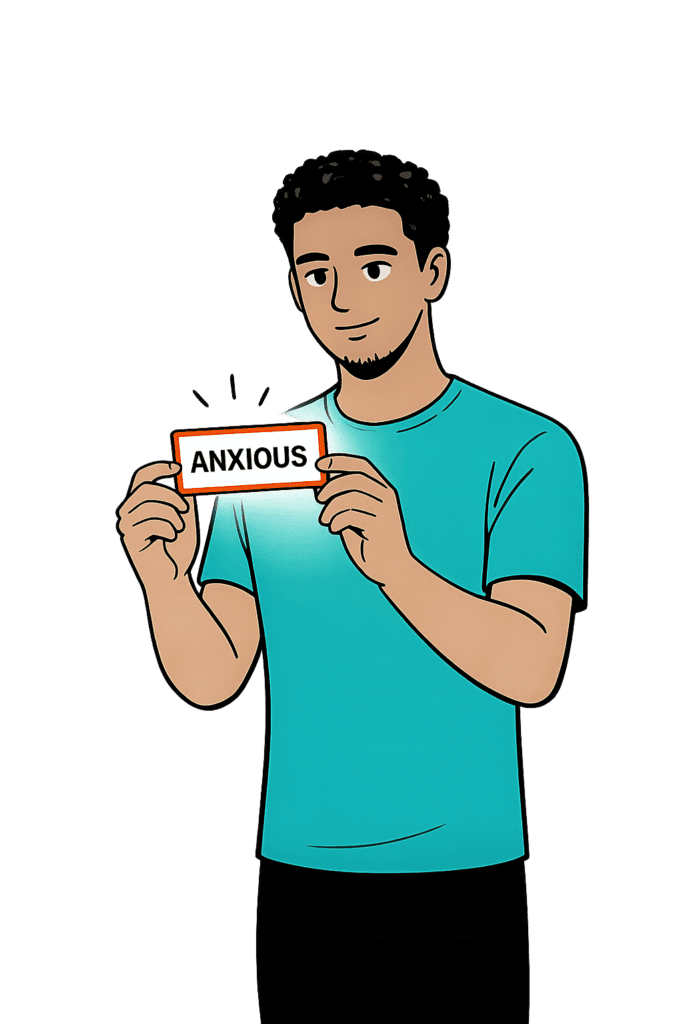
If you're interested in developing emotional literacy, you can start simply by naming what you're feeling, even if only to yourself. "I notice I'm feeling anxious right now." "I'm in a mood of frustration." "There's sadness present." Just naming creates a small but significant shift. You're observing the emotion rather than being completely identified with it.
You might also experiment with pausing when a strong emotion arises and asking: "Where do I feel this in my body?" Notice if there's tightness, heat, coldness, heaviness, or movement. This brings you into relationship with the embodied dimension of emotion.
Another practice could be to notice what interpretations accompany your emotions. When you feel anxious, what story are you telling yourself about what might happen? When you feel resentment, what narrative are you living about fairness or expectations?
These aren't exercises to do once and be done with. They're ongoing invitations to bring more awareness to your emotional life. Over time, the capacity grows. You become more fluent in the language of emotion. You can read what's happening more quickly and accurately.
And perhaps most importantly, you become kinder toward yourself. You stop treating your emotions as evidence that something is wrong with you and start seeing them as part of the rich, complex experience of being human.
Practices that support emotional literacy and embodied self-observation are available in The Human Connection Store, particularly in Emotional Mastery.
A Further Reflection
You might like to pause and reflect on this question:
"Which emotional tone or mood has been shaping my experience lately, and how does it influence what feels possible?"
Rather than trying to fix or change anything, simply notice. Pay attention to how this mood shows up in your language, your body, and your actions. What does the world look like from inside this mood? What actions feel available or unavailable? What interpretations seem obvious or impossible?
Accepting whatever mood we find ourselves in is key to living from moods that are enlivening, enriching, and productive. Not acceptance in the sense of staying stuck, but acceptance in the sense of acknowledging what's actually true right now. From that acknowledgment, something can shift. Not through force, but through the natural intelligence that emerges when we see clearly.
Emotional literacy is ultimately about developing a more honest, more compassionate relationship with the full range of your human experience. It's about learning to read the language of feeling with skill and understanding, so that emotions become allies in living well rather than obstacles to navigate around.
This learning never ends. There's always more subtlety to notice, more nuance to understand, more capacity to develop. It's simply what it means to be human, growing in awareness and wisdom over the course of a life.