Table of Contents
Coaching conversations can be powerful as clients begin to see themselves more clearly, recognize familiar patterns, and sense new choices becoming available. That's the good news and is something to be celebrated. However clients often return saying, "I understood it completely when we talked. Then the situation came back... and I reacted the same way." What is not always apparent to our clients is understanding that much of real transformation happens in coaching between sessions, where they are able to observe themselves in action and make micro adjustments as they go.
Understanding Coaching Between Sessions: Where Change Actually Happens
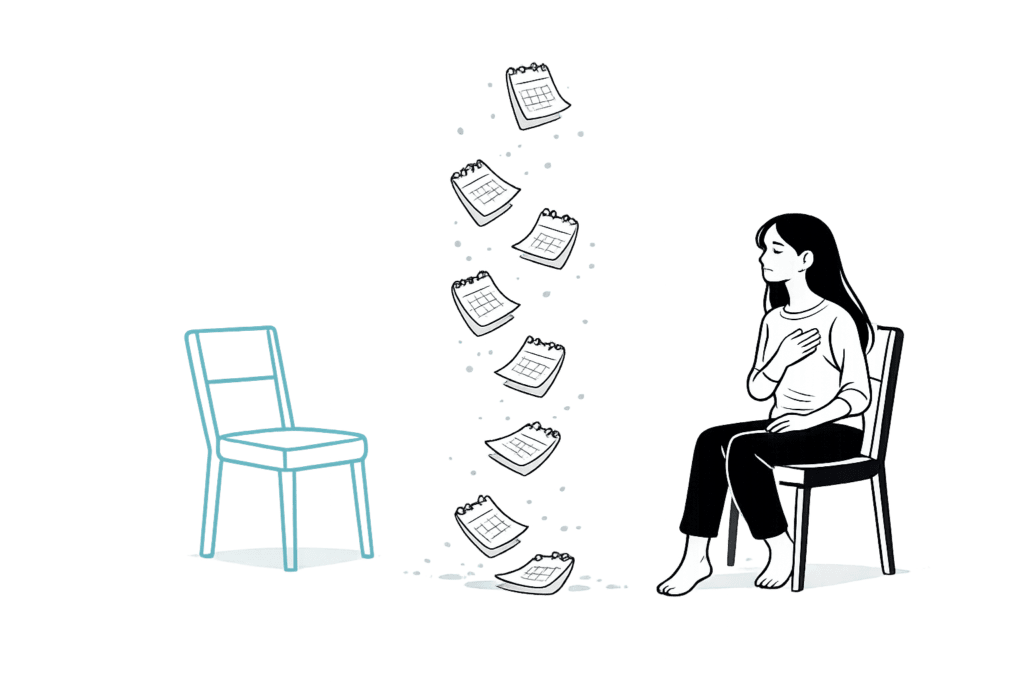
As coaches, we know that the conversation creates awareness. But awareness alone doesn't rewire patterns that have been building for years, sometimes decades, and even a life time. A client can see their pattern clearly in session, understand it, and feel committed to doing things differently. Two weeks later, they're back in the same situation, and are acting from habit before they even notice it happening.
This is the gap that coaching between sessions is designed to bridge. Spaced practice over time is far more effective than concentrated learning in single sessions. We don't learn new languages, musical instruments, or sports through intense weekend workshops. We learn through consistent practice over time.
The same is true for changing deeply embodied patterns of being. A client who interrupts people when anxious has been practicing that response for thirty years. Their nervous system has learned: uncertainty = speak quickly and their body knows this pattern intimately. One coaching conversation, however profound, won't undo three decades of embodied learning.
As James Clear explains in his book "Atomic Habits" small, consistent practices in real contexts can create the conditions for new patterns to emerge and stabilize. Linked to this, more and more research in neuroscience demonstrate that new neural pathways require repeated activation to become stable. Single insights don't rewire the brain. Repeated practice in varied contexts does.
This is why coaching between sessions isn't supplementary, it is essential.
The Common Frustration: When Insight Doesn't Stick
If you are a coach, no doubt you've heard this before: "I understood it when we talked. I was so clear about what I needed to do differently. Then the moment came, and I did exactly what I always do." And no doubt you've experienced this for yourself too. I know I have! I've seen something clearly, felt the shift, and then found myself right back in the old pattern when life got busy or the pressure was on. Understanding something and this translating to new and different, sustainable action is not the same thing.
I've long since realised that this is a normal and natural way we learn and change. We are not computers that can be reprogrammed with new code. We are embodied beings with histories, nervous systems, and deeply learned patterns that live in our bodies, not just our minds.
When a client "understands" something in a coaching conversation, they're accessing one state of consciousness which is reflective, calm, with time and space to think. When they're back in the triggering situation, they're in a completely different state, often stressed, reactive, with little room to pause. The insight from the reflective state doesn't automatically transfer to the reactive state. Often, in fact, when we are in a reactive state, our behaviour and actions are negatively exaggerated.
Data from the International Coaching Federation indicates that clients who engage in between-session practices report significantly better outcomes than those who don't, including deeper, more sustainable change. It makes sense that change requires repetition, ongoing application, and embodied learning, not just understanding. No wonder we aren't all Wimbledon champions!
What this looks like in Practice
Let me share an example of coaching between sessions in practice. A client recognized during a session that he spoke over colleagues when he felt unsure and could see this pattern clearly. In meetings where he felt uncertain about the outcome or worried he'd look incompetent, he would jump in, talk over others, fill every silence. He understood this pattern and could see how it came from fear, and undermined his leadership.
He felt genuinely committed to changing it, but two weeks later, he reported that he'd done it again, multiple times. His first reaction was frustration with himself. "I should be past this by now. I know better. Why do I keep doing this?"
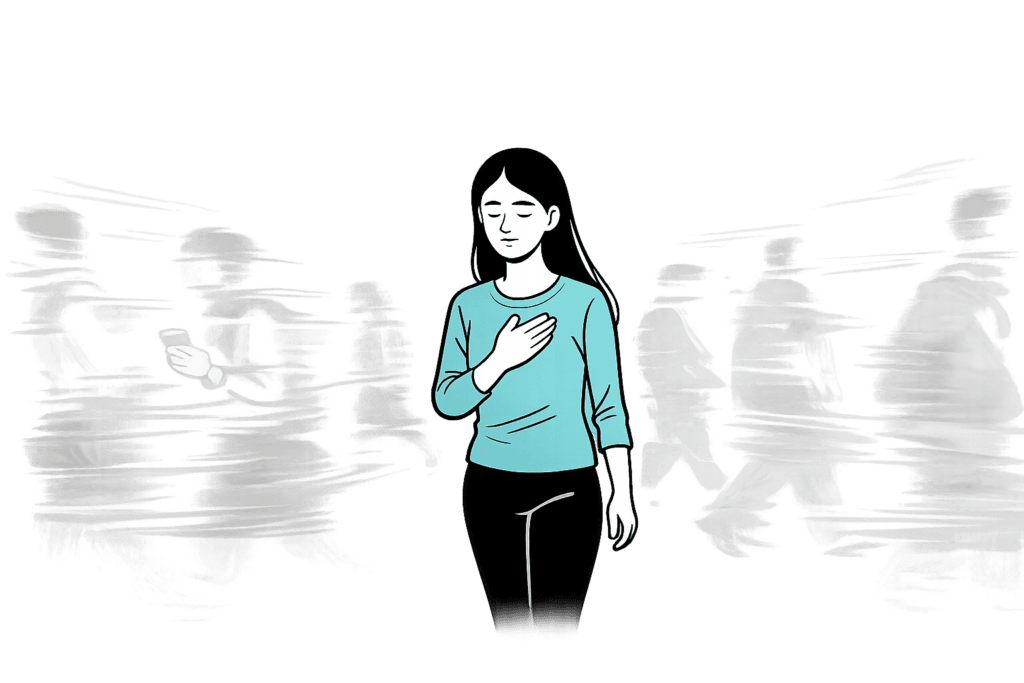
As coaches, we recognize this self-judgment and know how unproductive it is. Giving him a chance to recognize his self-judgement became a practice in itself in our sessions, as a starting point. We then focused on working with choice rather than control. We created a small practice that worked with the moment around the behavior. Before going into a where he felt uncertain, he would take three breaths, focusing on his out breath particularly and ask himself: "What kind of leader do I want to be remembered as in this room today?"
That process and question changed the quality of his experience. Yes, sometimes he still spoke quickly, but generally he was becoming more and more conscious and creating more and more choice. He could feel the impulse, notice the uncertainty underneath it, and sometimes choose differently.
This simple practice became a coaching between sessions bridge that allowed insights to deepen into embodied capacity. Over time, his body learned that uncertainty didn't require immediate action and he discovered that silence wasn't dangerous. His colleagues noticed his increased presence and the space he created for others to contribute. This is what effective coaching between sessions creates, ongoing learning where the actual transformation happens.
Why Coaching Between Sessions Matters for Transformation
When we ask clients to engage in practices, we're not "assigning homework." We're helping clients build essential capacities. A colleague called it "own work", which I love. We are providing them with the opportunity and capacity to notice themselves and to recognize patterns as they're happening, not just in retrospect. Included in this is:
- The capacity to self-regulate - to shift their state, choose their response, create space between stimulus and reaction.
- The capacity to experiment safely - to try new approaches in low-stakes moments before they find themselves in high-stakes situations.
- The capacity to learn through repetition - to practice new responses until they become more familiar than the old patterns.
Coaching between sessions brings the coaching conversation into every day contexts. Into meetings, difficult conversations, pressurised situations, and, and, and... It encourages learning rather than judgment and strengthens the client's capacity to continue learning long after coaching finishes.
It is important to include the body, not just thought experiments. After all, you can learn to play golf or tennis by reading a manual. This is why effective embodied practice matters bringing awareness to the body, not just the mind.
Principles of Effective Practice Design
Not all practices work equally well. I've learned this through watching what actually helps clients versus what creates more pressure or gets abandoned quickly.
The practice is small and specific. Not "Be more present in meetings" but "Take one full breath before responding to questions." Not "Set better boundaries" but "Notice when you feel the impulse to say yes, pause for three seconds, then decide." Vague, ambitious and ambiguous practices rarely work, instead the smaller and more specific the practice, the more likely it is to produce a change,
The practice is tied to the client's actual pattern. Generic practices from books or trainings often fall flat. Effective coaching between sessions grows from deep listening to this particular client's experience. When my client's practice asked him to breathe and ask himself a question, that came from understanding his specific pattern, which was speaking to manage uncertainty. A generic "listen more" wouldn't have worked.
The practice builds awareness before demanding behavior change. This is crucial. Practices that ask clients to "stop doing X" or "start doing Y" often create shame when the old pattern runs anyway. It is far better to design practices that ask: "Notice when X happens. What do you feel? Where in your body? What story are you telling yourself?" This creates awareness which automatically opens up choice. Trying to force behavior change without awareness creates pressure.
The practice is co-created, not assigned. When I design a practice for a client, it often doesn't stick. When we design it together - when the client helps shape it, adjusts it to fit their life, makes it their own - they're far more likely to actually do it. "What would feel doable for you?" "How could we adjust this so it fits your schedule?" "What would make this practice feel supportive rather than like one more thing on your list?"
The practice works with the client's Way of Being, not just behavior. This means attending to language, mood, and body. What they say to themselves. What emotional state they're in. What's happening somatically. A practice that only addresses behavior misses the deeper patterns that drive the behavior in the first place.

Designing Practices With Care
Effective practices may appear simple, but they are the result of careful discernment and deep listening. Grounded in lived experience, they work with how the client is being in language, mood, and body rather than trying to force behavioral change. Instead of the client trying to correct behavior or apply a generic technique, these practices meet them where they are and work with how they are being in the moment.
In this way, a practice carries a very different message. It says, "Let's explore this" rather than "You need to be fixed." The intention is not improvement through effort, but understanding through awareness where small but meaningful changes become possible because nothing is being forced.
When practices support awareness rather than performance, something magical happens. Clients begin to trust their own noticing. They become less dependent on external validation or direction, and more able to sense what is needed for themselves. Over time, this self-trust deepens and with it comes a more sustainable capacity for choice, learning, and change.
Coaching between sessions ultimately creates the development of the client's own capacity to notice, learn, and choose differently, not only behavior change.
Common Mistakes in Between-Session Practice Design
Even experienced coaches can design practices that don't serve the client well. Here are patterns I've noticed, including in my own work:
Making practices too big or complex. "Journal for 30 minutes every morning about your leadership patterns" sounds meaningful. But if the client doesn't have 30 minutes, or doesn't like journaling, they won't do it and then feel bad about themselves. A better option would be something like: "Write one or two sentences after a difficult meetings answering the question "What did I perceive to be at stake for me?"
Giving practices as assignments rather than co-creating them. When I tell a client what to practice, I'm positioning myself as expert and them as student who needs to comply which rarely creates sustainable change. When we design the practice together, the client takes ownership and recognise that they are an expert in their lives. As a result they're far more likely to actually engage with it.
Focusing on behavior change before building awareness. "Stop checking your phone during meetings" is a behavior change demand. For someone whose phone-checking is an anxiety management strategy, this practice just creates shame when they do it anyway. An alternative to this would be "Notice when you reach for your phone. What are you feeling? What are you avoiding?" Again, we are creating awareness and behaviour change can emerge naturally from that.
Not following up. If we design a practice and never ask about it again, we may signal it wasn't actually important. Following up isn't about accountability in a checking-up way. It's about genuine curiosity: "What did you notice?" "What worked?" "What didn't?"
Making practices feel like more work instead of support. If a practice adds stress to an already overwhelmed client's life, they won't do it. Or they'll do it with resentment, which defeats the purpose.
The best practices feel like a fairy godmother, not a wicked step mother!
A Question for Coaches
Where could you help your clients bridge the gap between insight and application through small, specific practices?
It could be worthwhile to reflect on that as well as the following questions:
- What patterns do you notice that aren't yet translating into new responses?
- How much time do you spend in sessions co-designing practices?
- How much do you leave to chance, assuming clients will figure out the application on their own?
These questions keeps me honest and reminds me that my job isn't only to generate insight, it's also to support integration, which doesn't happens in the conversation itself. It happens in the moments between sessions, in the small practices clients carry back into their actual lives.
I'd genuinely love to know what you're discovering in this space. What practices are you designing with your clients? What works, what surprises you, what has taught you something about how people actually change?
I ask because this isn't a formula. It's a practice we refine over time, shaped by each unique client.
Practices specifically designed for between-session coaching work are available in The Human Connection Store.