Table of Contents
A friend recently told me: "I asked ChatGPT to create reflective practices for my leadership development, and it gave me excellent questions. They were thoughtful, well-structured, and useful. Why would I need anything else?"
It's a fair question. And it highlights something important we need to understand about the AI vs human coaching debate and how development actually works.

What AI Coaching Does Brilliantly
To be clear, AI coaching is extraordinary at synthesizing information, recognizing patterns across vast amounts of data, and generating content that draws from collective human knowledge. If you ask it for reflective questions about leadership presence, emotional intelligence, decision-making under pressure, or a myriad of other topics, you'll likely get a thoughtful response.
This is genuinely valuable. AI can accelerate learning, spark insight, and offer frameworks that would take hours to research manually.
So what's the limitation?
What AI Coaching Cannot See
AI can give you questions. What it cannot do is see or know you, the specific human being asking them.
It cannot observe that when you speak about a difficult decision, your shoulders rise toward your ears. It cannot notice the subtle shift in your voice when you mention a particular colleague. It cannot feel the mood of despondence that colours your interpretation of what's possible, or recognize the embodied pattern that has you saying yes before you've even considered the request.
It cannot know your history, including the early experience where you learned to earn approval through overwork, the relationship that shaped how you handle conflict, the organizational culture you're embedded in, and how you are feeling in your body in this moment.
Each person brings a whole world. That world cannot be captured in a prompt or AI response.
AI vs Human Coaching: Understanding the Real Difference
What I've learned from more than 5,000 hours of coaching is that development doesn't happen through better information. Research in adult development theory confirms this: transformation happens through relationship—with yourself, and with others who can see you."
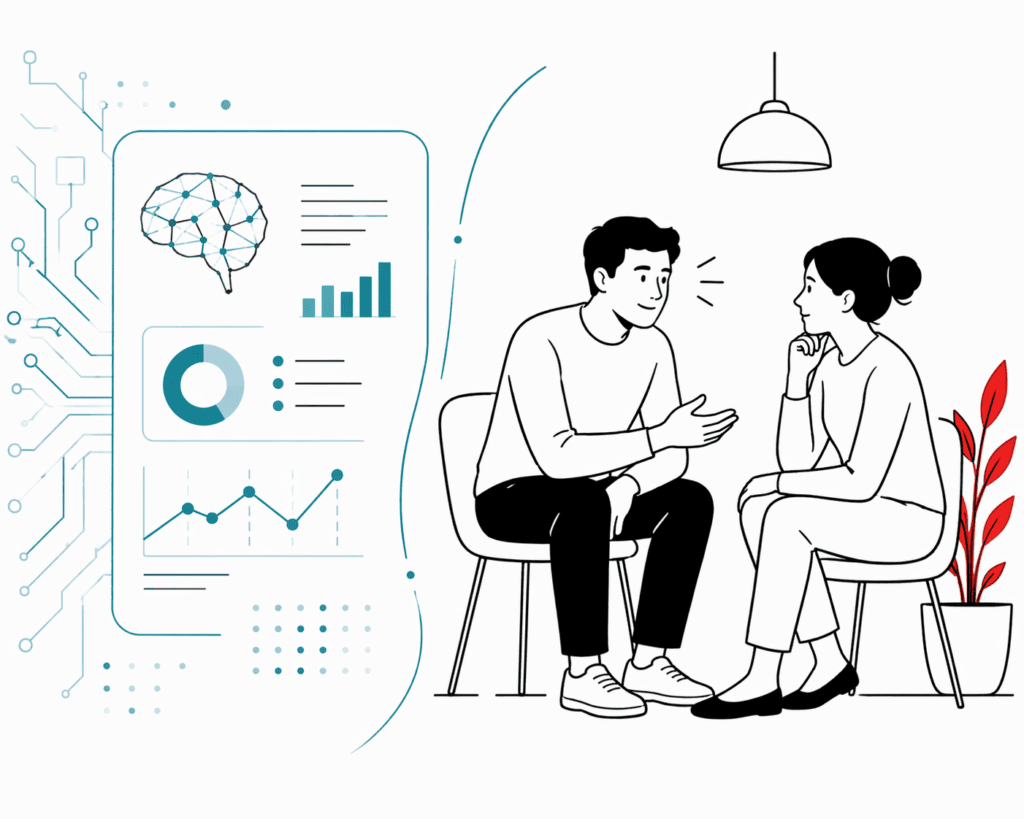
This is where AI vs human coaching reveals its clearest distinction. AI provides information. Human coaching provides observation, presence, and the capacity to witness what's actually happening in your body, your language, and your way of being.
Development Is Relational, Not Informational
Grace's Story
When I worked with Grace (not her real name), a senior leader managing multiple projects and teams, she came to coaching saying she needed "better time management and prioritization skills." She felt constantly overwhelmed by too many demands, not enough hours, with everything feeling urgent.
She'd already tried the usual solutions—productivity apps, delegation frameworks, and time-blocking techniques. Nothing seemed to help. The overwhelm kept returning.
In our first conversation, I supported her to become aware of something she hadn't seen before: her breathing was shallow and rapid throughout our session. When she described her workload, her language became faster, almost tumbling over itself, saying "and then this, and also that, and they need this by tomorrow, and I haven't even started the other thing." Her hands moved quickly, her chest was tight, and her eyes darted as she mentally scrolled through her endless list. Her body was in a heightened state of overwhelm and constriction, operating from a place of threat rather than capacity.
What emerged through our work together wasn't about better time management. It was about recognizing that she had learned to interpret 'a lot to do' as 'danger.' Her body was moving into protection mode, not preparation mode. From that state of urgency and constriction, she literally couldn't access the clarity, strategic thinking, or discernment she needed.
The overwhelm wasn't a planning problem. It was a pattern in how she was being—a deeply learned response to 'too much.' From that understanding, we designed practices specific to what was happening for her. When she noticed her chest tightening and thoughts racing, she would step away from her desk for two minutes before responding to urgent emails. She began observing the mood of urgency that made everything feel equally critical, practicing the reminder 'not everything urgent is important.'
AI coaching could have given her excellent frameworks for time management—the Eisenhower matrix, Pareto principle, and energy management strategies. All useful.
What it couldn't do was notice that when she opened her laptop to show me her task list, her whole body tensed. It couldn't observe that she held her breath when her phone buzzed. It couldn't feel the mood of barely controlled panic that coloured how she moved through her days.
And it couldn't design practices calibrated to her actual developmental need. Not better organizational systems, but tools to help her settle and find her center first, so that she could then access her considerable capacity for strategic thinking and prioritization.
Human Wisdom Is Embodied and Contextual
The practices I create don't come from synthesizing information. They come from lived observation across thousands of hours with real people in complex situations.
I've watched what happens when someone stuck in resignation receives an invitation versus when someone in urgency does. I've noticed how different people require different entry points. I've seen what creates opening when someone feels defended, what supports integration when insight arrives, what helps when old patterns reassert themselves.
This kind of knowledge is embodied. It lives in relationship. It emerges through collaboration, not transaction. That's why the reflective practices I design for leaders are calibrated to actual human patterns, not generic frameworksIt's the difference between knowing about leadership presence and being able to sense when someone has left their body during a difficult conversation. Between having information about emotions and recognizing the specific mood shaping someone's world right now. Between understanding productivity theory and seeing that this particular person's challenge isn't time management—it's fear and overwhelm.
AI has access to what can be written. It doesn't have access to what can only be witnessed.
The Role of Collaboration
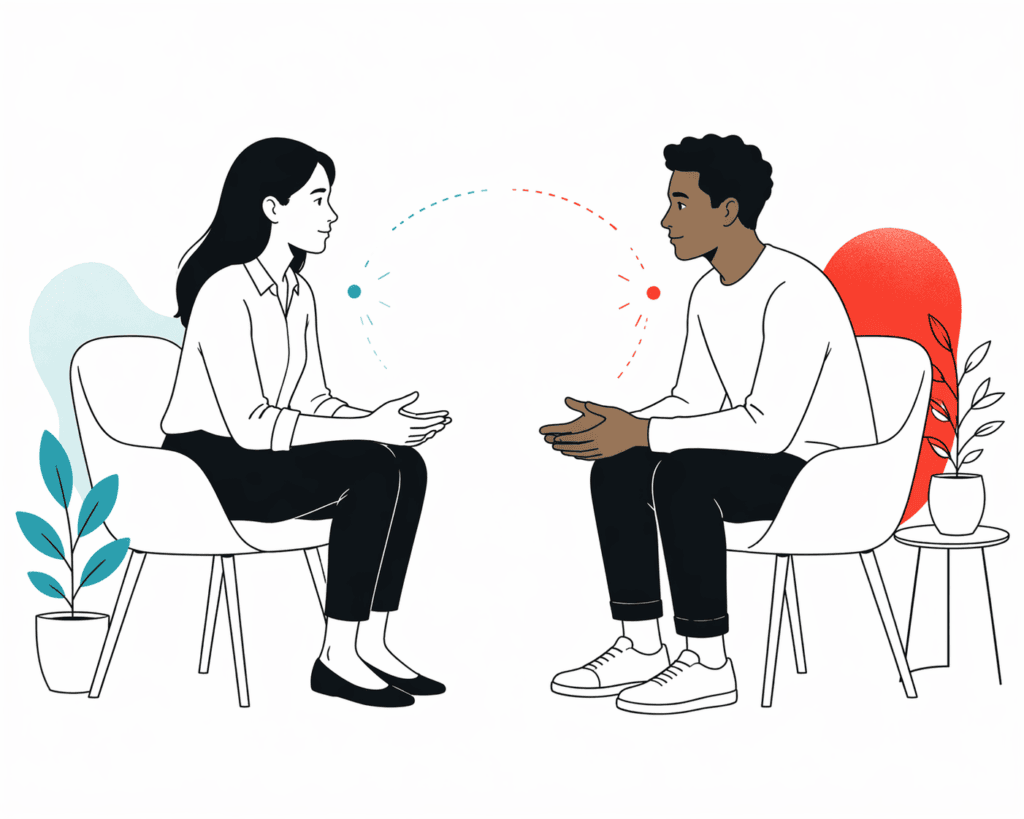
Development is also deeply collaborative. We learn about ourselves through conversations with others who can reflect back what we cannot yet see.
A good coach, mentor, or developmental partner doesn't just provide information. They hold complexity. They notice what's emerging. They sense when to invite reflection and when to offer challenge. They attune to what's needed in this specific moment with this specific person.
This requires presence, not processing power. It requires the capacity to be with someone in their uncertainty, their resistance, their breakthrough—without rushing to fix or solve. To trust the unfolding without forcing it toward a predetermined outcome.
AI can simulate empathy. It cannot offer genuine accompaniment.
What This Means for Your Development
None of this means AI coaching isn't useful. Research from The Conference Board shows that AI can provide up to 90% of day-to-day coaching functions—and that's valuable. Use AI for information, for generating initial ideas, for accessing knowledge quickly. But understand what it cannot do.
The AI vs human coaching distinction isn't about which is better—it's about understanding what each can and cannot provide.
AI cannot see the whole world you bring. It cannot calibrate practices to your specific developmental edge. It cannot hold the relational space where real transformation happens. It cannot offer the embodied wisdom that comes from years of sitting with human complexity.
When someone tells you 'I'm overwhelmed,' AI will give you time management techniques. A developmental coaching approach will help you see that the overwhelm reflects a Way of Being where productivity defines worthiness, rest feels dangerous, and saying no threatens belonging. The actual work is noticing this pattern in your body, your language, and your emotional responses, then building practices that shift how you fundamentally relate to time, capacity, and enough.
When someone says 'I need help with conflict,' AI will give you conflict management frameworks. Whereas human coaching recognizes conflict avoidance as how you're being (not just what you're doing), shaped by early experiences of disagreement, cultural messages about harmony, and embodied patterns that equate tension with danger. The actual work isn't better scripts but shifting how you're being through practices that help you notice when you're moving into protection mode, recognize the difference between actual threat and discomfort, and gradually build capacity to stay present when perspectives differ.
That kind of seeing goes beyond knowledge and frameworks. It requires human wisdom and relational presence—the capacity to observe not just what you're saying but how you're being as you say it.
When you work with practices created through deep human observation of how people actually change (not just what they need to know), you're engaging with something fundamentally different from information transfer. You're working with tools designed by coaches who understand that your development requires the same relational, embodied awareness the practices
The Middle Path: Human Wisdom for Self-Observation
There's a space between AI-generated content and live human coaching that matters.
AI can give you excellent questions, but it cannot design practices calibrated to the actual patterns coaches witness in thousands of hours with real people. It cannot teach you to observe yourself the way a developmental coach observes - noticing your breath, your body, the mood shaping your interpretation, the language revealing your Way of Being.
Live coaching offers collaborative observation - another person seeing what you cannot yet see in yourself. That's irreplaceable for deep developmental work.
But there's also value in practices designed from human wisdom that guide your own self-observation. Not AI-generated frameworks, not live coaching presence, but tools that help you develop the capacity to notice your own embodied patterns.
That's what reflective practices designed by experienced coaches offer - [human wisdom made accessible](LINK TO YOUR STORE), teaching you to witness yourself more clearly. They won't replace the seeing that happens in relationship with a skilled coach, but they can support your capacity for self-awareness between sessions or when live coaching isn't accessible.
Think of them as learning to use the lens a coach would use - on yourself.
A Reflection
You might like to pause here and consider:
Where are you in your development right now? What practices might help you build capacity for what feels difficult, rather than just knowing more about it?
Real development—the kind that shifts how you're being, not just what you know—requires human wisdom, collaborative observation, and practices designed for the beautiful, messy complexity of actual human lives.
That's what AI cannot download.