Table of Contents
We love insights. We buy books, listen to podcasts, and go to courses for insights. They can feel energizing, clarifying, and sometimes even life-changing. In coaching conversations, leadership programmes, or retreats, people often experience powerful realizations.
And yet, weeks later, we often notice that although we understood and believed a change was important to make, somehow we are doing the same things again. This can feel disappointing or confusing, and it's easy to determine that we simply lack discipline or commitment.
More often, something else is happening. Insight shows us what is possible, however, insight alone doesn't remake the deeper patterns that live in our body, emotions, and nervous system. It's not that we are failing. It's simply that we need something more than insight. We need embodied practice.
Why Embodied Practice Bridges the Knowing-Doing Gap
The gap between knowing and doing is one of the most frustrating aspects of personal development. We know we should set better boundaries. We know we need to listen more deeply. We know we're too reactive under pressure. The insight is clear. The intention is genuine. And yet, in the moment that matters, we find ourselves doing the old thing again.
Research shows that people forget 70% of new information within 24 hours without practice to integrate it. Insight might land intellectually, but without embodied practice to anchor it, it simply doesn't stick.
Why does this happen?
Because insight lives primarily in our thinking mind. It's a cognitive recognition, a mental understanding. But most of our patterns live deeper than thought - in our nervous system, our emotional responses, our embodied habits. When stress arrives, when uncertainty surfaces, when old triggers activate, our nervous system doesn't consult our insights. It does what feels familiar and normal, even if it isn't the best option or approach. This isn't a failure of willpower. It's biology.
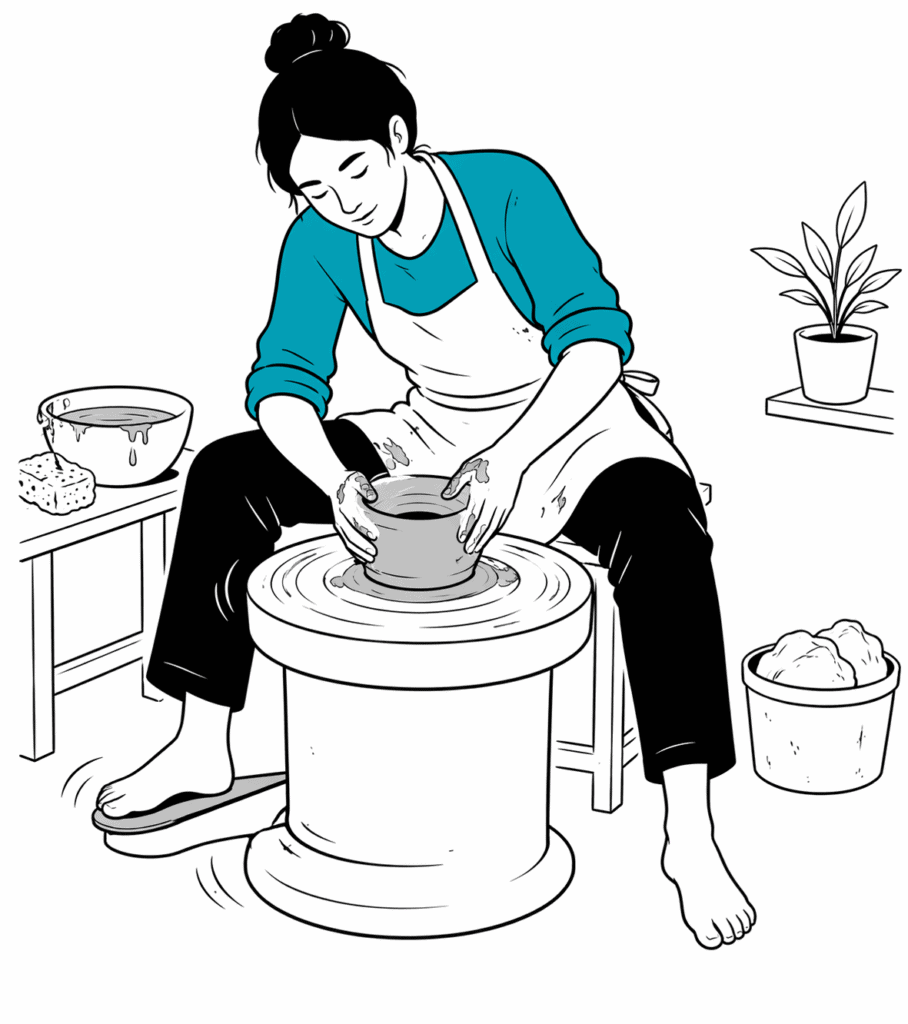
Embodied practice creates new familiarity. It gives your nervous system something different to recognize as "normal." It builds capacity at the level of your body, your breath, your automatic responses.
Insight is the Door, Practice is the Key
Insight reveals what is possible for us. It opens a door we didn't know existed. It shows us a different way of being, responding, or relating. This is important. Without insight, we don't even see that change is possible. We remain convinced "that's just how I am." But insight alone doesn't walk us through that door.
Embodied practice is what walks us through. Practice invites the whole of us - body, mood, attention, breath -into the learning process. Over time, this repeated practice supports a shift in how we think, feel, and respond. Not because we're forcing ourselves to be different, but because we're creating new neural pathways, new somatic patterns, new ways of being that become increasingly familiar.
Think of it this way: Insight is the map. Embodied practice is the territory. You can study the map all you want, understand every detail of the terrain. But until you actually walk the path, repeatedly, your body doesn't know the way.
Understanding Embodied Practice: More Than Repetition
Embodied practice isn't just repeating an action. It's not about mechanically doing something over and over, disconnected from awareness or meaning. Instead it is about engaging your whole self in the process of change.
It's practice that:
Lives in your body, not just your head. You're not just thinking about listening differently. You're noticing when your jaw tightens before someone finishes speaking. You're feeling your feet on the ground. You're sensing the urge to interrupt before it becomes action.
Works with your nervous system. Studies in neuroscience demonstrate that repeated practice literally rewires neural pathways, creating new default responses. Embodied practice creates patterns that your nervous system recognizes as familiar, making new responses increasingly automatic.
Includes your emotional world. Real change happens when we practice not just the action, but the emotional state that supports it. Practicing staying present with discomfort. Practicing curiosity when you want to defend. Practicing steadiness when urgency arises.
Happens in relationship with your Way of Being. Embodied practice works with who and how you are being, not only isolated behaviors. This is what makes embodied practice different from habit formation or behavioral training. It's not about forcing yourself to do something different. It's about creating the conditions for something different to emerge naturally.
Embodied Practice in Action: A Real Example
Let me share a story that illustrates how embodied practice creates change that insight alone cannot.
I was working with a leader who had a powerful insight during one of our sessions: "I interrupt people when I feel uncertain. I jump in because I'm afraid things will go off track."
She genuinely understood the pattern. She could see it clearly. She left the session feeling hopeful and determined to "listen more."
Two weeks later, she came back frustrated.
"I did it again. Multiple times. I understood the pattern, but in the moment, I couldn't stop myself. I'd be listening, someone would say something I wasn't expecting, and before I knew it, I was interrupting."
Rather than going back over the insight, which she clearly already had, we took a different direction.
We explored what she could experiment with. Not a rule or a should, but a practice.
She came up with something simple: Before speaking, she would place both feet on the floor, breathe twice (paying special attention to her out-breath), and ask herself, "How am I listening?"
This is an example of an embodied practice. It's not just "listen more." It's a specific, repeatable action that engages her body (feet, breath), her attention (the question), and interrupts the automatic pattern.
We spoke about how it probably wouldn't be easy or fluid to begin with. She agreed she would give herself time to practice—and permission to not be perfect.
Here's what happened:
Initially, she would still interrupt. Then she'd remember her practice and criticize herself. "I did it again! Why can't I just stop?"
But over the next few weeks, something shifted. She began to catch herself earlier. First, she'd notice after she'd already interrupted. Then she'd notice as she was interrupting. Eventually, she'd notice the urge to interrupt before she actually did it.
Over time, when she didn't catch herself, she became more amused than annoyed. "There I go again," she'd think, without the harsh self-judgment.
Her nervous system started to learn that it was possible to stay present and curious, even when she felt uncertain. The urge to interrupt didn't disappear, but it no longer controlled her.
More Stories of Practice Creating Change
The Leader Who Practiced Pausing
Another client realized he made his best decisions when he was calm, but his worst when he was acting from a sense of urgency. The insight was clear. But urgency didn't ask permission before showing up.
His embodied practice: When he noticed the mood of urgency arising (tight chest, racing thoughts, the feeling that "this needs to happen NOW"), he would step outside for two minutes. Not to think through the decision, but simply to walk and breathe.
This small practice, repeated over weeks, taught his nervous system that urgency didn't always require immediate action. He could feel the urgency and still choose his response.
The Parent Who Practiced Presence
A mother I worked with realized she was always rushing her children. "Hurry up, we're late. Come on, let's go." The mornings felt frantic, and she could see it was affecting everyone.
Her insight: "I'm anxious about being late, so I'm making everyone else anxious too."
Her embodied practice: In the morning, before waking her children, she would sit on the edge of her bed for three minutes. Feel her breath. Feel her body. Notice what she was bringing to the day. Set an intention: "We have enough time."
This didn't magically make mornings perfect. But it gave her nervous system a different starting point. More often than not, mornings became calmer. When they didn't, she at least knew she'd tried to create a different foundation.
What Embodied Practice Actually Looks Like
Embodied practice is gentle repetition, nott about pushing or performing. Instead, it's about small, repeated, kind, grounded attention.
It might look like:
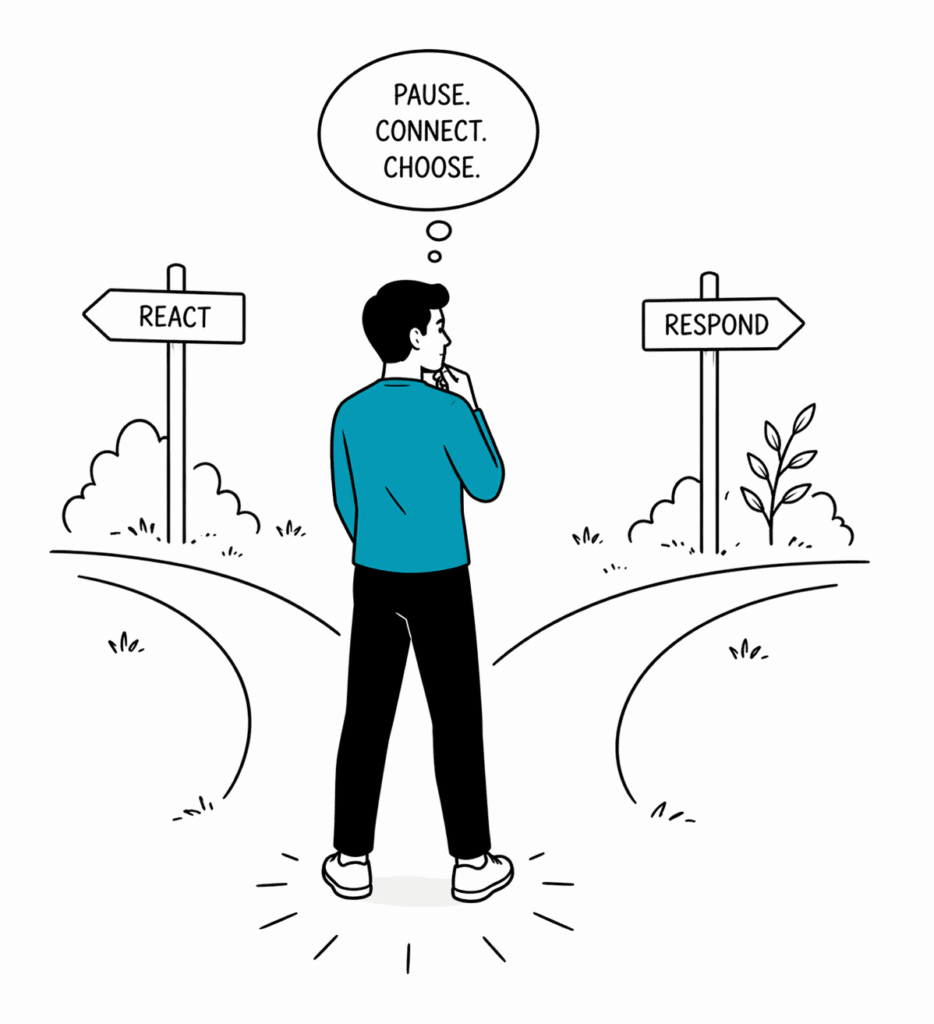
Taking one conscious pause before responding, feeling your feet on the ground and your breath in your body before you speak.
- One deliberate breath when tension rises, noticing the exhale and allowing your shoulders to soften slightly.
- One reflective question at the end of the day: "Where did I respond from pattern today, and where did I choose something different?"
- One small action aligned with what you care about, even if it feels awkward or unfamiliar at first.
Repeated gently over time, these moments begin to create new pathways.
The key word here is "gently." It isn't about forcing yourself to be different or criticizing yourself when you forget. It's about returning, again and again, with kindness. You will forget your practice. You will do the old thing. This isn't failure, it's part of the process and it's learning. The practice is noticing you forgot, and beginning again. Without self-judgment. Without making it mean something about your character or commitment.
Just: "Oh, I forgot. Let me try again."
This gentleness is essential. If practice becomes another way to judge yourself, it won't create the nervous system safety that allows change to happen.
Creating Your Own Embodied Practice
Not all practices are created equal. Here's what makes embodied practice effective:
It's specific and repeatable. "Listen more" isn't a practice. It's an intention. "Place both feet on the floor, take two breaths, and ask 'How am I listening?'" is a practice. It's something you can actually do, repeatedly, in the same way.
It engages your body, not just your mind. Effective embodied practice always includes a somatic element such as breath, posture, sensation, movement. This is what makes it embodied rather than just conceptual.
It's small enough to actually do. If your practice requires 30 minutes of meditation every morning, and you don't have 30 minutes, you won't practice. Better to practice something small that you'll actually do than something ambitious that you won't.
It addresses the pattern at its root. The interrupting leader's practice worked because it addressed what was underneath the interrupting, which was the feeling of uncertainty and the need to control. The practice gave her a way to stay present with uncertainty rather than avoiding it.
It's kind, not punitive. Your practice should feel like care, not discipline. Like a gentle invitation, not a harsh demand. If it feels like punishment, it won't work.
So how do you create your own embodied practice?
Start with an insight you've had. Something you genuinely see about yourself that you'd like to shift.
Ask yourself: "What small, repeatable action could help me practice this new way of being?"
Make sure your practice includes your body, ie your breath, your posture, your physical sensations.
Start smaller than you think you need to. If you're thinking "five minutes daily," try "two minutes daily." If you're thinking "every meeting," try "one meeting per day."
Give yourself permission to adapt the practice as you go. This isn't about getting it right. It's about finding what actually supports you.
And remember: the practice is returning when you forget, not never forgetting.
These practices for embodied learning support the journey from insight to integration.
Why Embodied Practice Requires Patience
Embodied practice respects that we are biological beings. Just as muscles strengthen through steady movement, our inner world reorganizes through steady noticing. This takes time.
Data on habit formation indicates that it takes an average of 66 days of consistent practice for a new behavior to become automatic. And that's for relatively simple behaviors. Complex patterns involving emotion, nervous system responses, and relational dynamics can take longer.
This isn't because you're slow or resistant. It's because lasting change happens at the pace of biology, not the pace of insight.
Our culture tells us that transformation should be immediate. Have the insight, make the change. Read the book, implement the system. Understand the problem, fix it now.
But embodied practice asks us to trust a slower process.
Leaders who practice in this way gradually become different.
They become less reactive, pausing before responding rather than immediately defending or explaining when challenged.
They become more thoughtful, considering multiple perspectives before deciding rather than rushing to the first solution that appears.
They stay more grounded in challenge, maintaining steadiness when others are escalating or collapsing into urgency.
They grow more capable of holding complexity without immediately needing to resolve it, trusting the process rather than forcing premature closure.
These shifts don't happen because they decided to be different. They happen because repeated embodied practice rewired their default responses. The practice builds capacity. And capacity allows new responses to emerge naturally, without force.
What Research Shows About Embodied Practice
The power of embodied practice isn't just experiential wisdom, it's supported by research across multiple fields. Neuroscience shows us that repeated practice creates and strengthens neural pathways. The more we practice a response, the more automatic it becomes. This is neuroplasticity in action - our brains literally rewire based on what we repeatedly do.
Somatic psychology demonstrates that our bodies hold patterns and memories that cognitive approaches alone cannot access. Embodied practice works with the body's wisdom, allowing change to happen at the level where patterns actually live.
Research on contemplative practices shows that even brief, regular practices can create measurable changes in emotional regulation, attention, and stress response. It's not about hours of practice, it's about consistency.
Studies of skill acquisition across domains (music, sports, crafts) consistently show that deliberate, repeated practice is what creates mastery. The same principle applies to developing new ways of being.
Insight might tell you where you want to go. But embodied practice is what gets you there.
A Reflection
Think of a recent moment when you learned something meaningful about yourself.
Maybe you realized you avoid difficult conversations. Maybe you noticed you say yes when you mean no. Maybe you saw how you collapse into urgency under pressure.
Whatever it is, you have the insight.
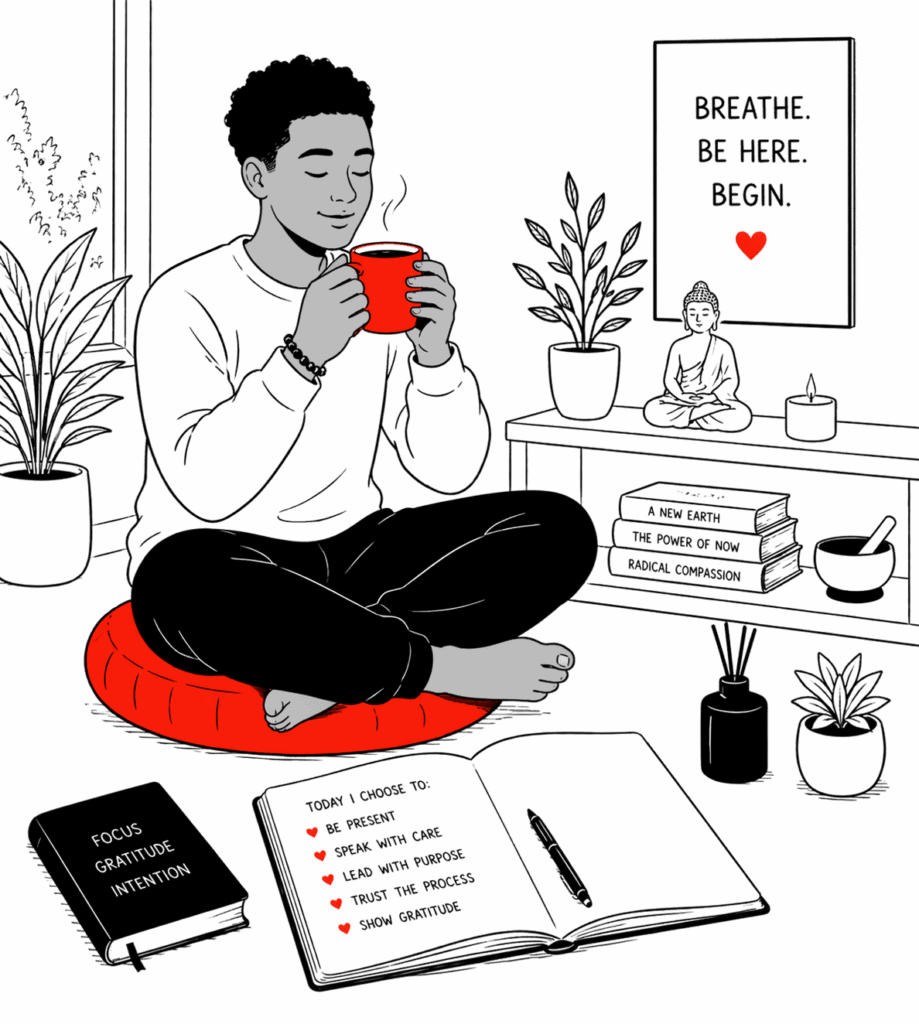
Now ask yourself: "What small, steady embodied practice could help me embody this insight?" Not what big change should you make. What small practice could you begin? What would engage your body, not just your mind? What could you do repeatedly, gently, with kindness?
Hold it lightly. Let it evolve. Pay attention to what you notice over time.
Remember: This isn't about perfection. It's about persistence. Not force, but gentle repetition. Not judgment, but kind return.
Practices to support this kind of embodied practice are available in The Human Connection Store.
Real transformation - the kind that shifts how you're being, not just what you're doing - requires patience, curiosity, and compassion. The journey from insight to integration isn't linear. It's a spiral. You'll return to the same patterns again and again, but each time from a different level of awareness, each time with more choice, each time with more possibility. This is the practice of embodied practice: not perfection, just presence; not forcing, just noticing; not judgment, just gentle, persistent curiosity about what's true.